

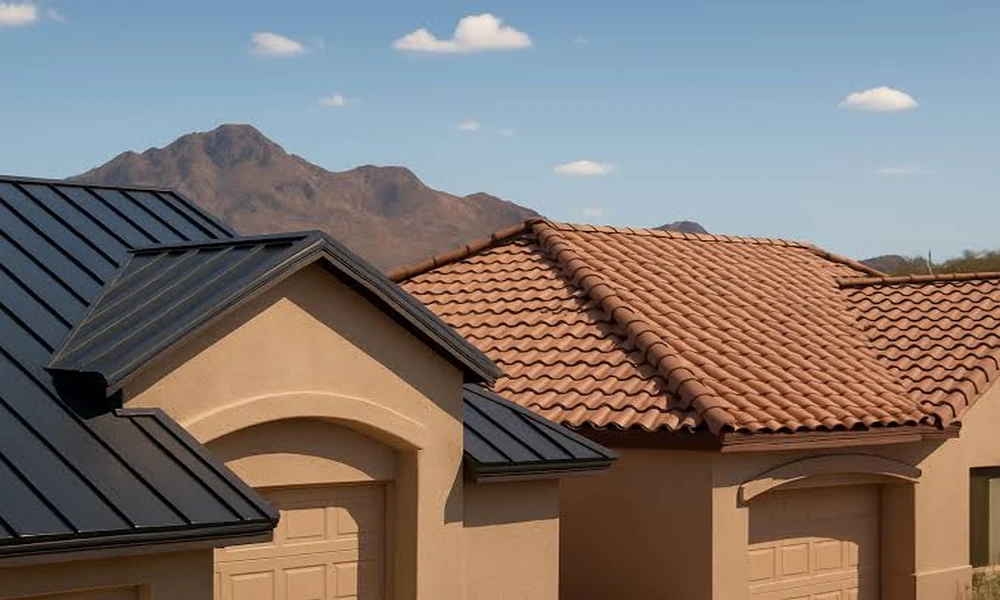
A roof in the Las Vegas Valley spends most of the year under intense sun and very little of it under rain. That imbalance shapes how roofs fail. Heat and UV quietly age seams, sealants and underlayment for months, then a monsoon cell drops an inch of water in under an hour and finds every weakness at once. Waterproofing a roof here is less about the main field of the roof and more about the details: flashing, seams, penetrations, drainage paths and the layer hidden under tile or shingles. Each roof system has its own weak points, and keeping it dry means knowing which ones to watch.
Getting those details right takes a crew that handles both the roofing and the metal that seals it. For homes, vegasbornroofing.com handles emergency leak response, tile and underlayment replacement and manufactured home roofing, and its in-house sheet metal shop fabricates the flashing, scuppers, edge metal and HVAC curbs that commercial roofs depend on. Owners comparing options for Las Vegas Nervada water proofing at the roof level can call 702-876-2630 to have a roof checked before the next storm season rather than after it.
Single-ply TPO and PVC
These white membranes dominate newer commercial roofs because they reflect heat well. Their seams are heat-welded, which makes them strong when done right and fragile when rushed.
- Seams. Welds should be probed along their full length. Cold welds can look fine but peel apart once daily heat cycles start working them.
- T-joints. Where three sheets meet, a small patch is usually required. A missing patch leaves a tiny channel for water.
- Penetrations. Pipes and conduits should get prefabricated boots or field-wrapped flashing made of the same membrane. Pitch pans filled with sealant shrink and crack in the heat and need regular topping off.
- Compatibility. Asphalt products damage PVC and do not bond to TPO, so patches must match the membrane.
EPDM
Black rubber roofs remain common on older strip centers and warehouses. EPDM itself lasts a long time, but its seams and edges are where water gets in.
- Seam tape. Taped laps can lift at the edges after years of heat. Lifted edges need cleaning, priming and new cover tape.
- Shrinkage. Aging EPDM can shrink and pull away from parapets and curbs, stretching the base flashing tight across the corner where wall meets deck.
- Surface heat. A dark membrane runs far hotter than a white one, which speeds the aging of every adhesive on the roof.
Modified bitumen and built-up roofs
Layered asphalt systems are durable and forgiving, but the desert sun breaks down exposed asphalt steadily.
- Surface protection. Gravel, granules or a reflective coating shield the asphalt. Bare spots where gravel has blown or washed away age much faster.
- Blisters and cracking. Blisters form when trapped moisture or air expands in the heat. Alligator cracking on the surface signals the top layers are drying out.
- Base flashing. Flashing at parapet walls should rise well above the roof surface and be capped with metal coping or counterflashing so water cannot run behind it.
Metal roofs and wall panels
Metal handles sun well but moves more than almost any other material as temperatures swing between day and night.
- Fasteners. Exposed screws rely on rubber washers that harden under UV. Movement also slowly enlarges screw holes, so fastener checks matter on older panels.
- Laps and trim. Sealant at panel end laps, ridge caps and rake trim dries out and needs renewal before gaps open.
- Standing seam clips. Concealed clips let panels slide as they expand, which is why standing seam systems resist leaks better than screw-down panels in this climate.
Tile and shingle roofs
Most Las Vegas homes wear concrete tile, and the tiles are rarely the problem. Tile sheds most water, while the underlayment beneath it is what actually keeps the house dry.
- Underlayment age. Concrete tile can last for generations, but older felt underlayment bakes and turns brittle far sooner. Lifting the tile, replacing the underlayment and relaying the same tile often solves chronic leaks.
- Modern underlayments. Synthetic and high-temperature self-adhered products hold up better to attic heat and are now common on reroofs.
- Valleys and walls. Valley metal, sidewall flashing and headwall flashing need to be clear of debris so water can flow off the roof.
- Low-slope shingles. Code generally calls for a double layer of underlayment when shingles are installed on slopes between 2:12 and 4:12, a detail worth confirming on patio covers and additions.
Coated roofs
Coatings now extend the life of many aging commercial roofs, but a coating only waterproofs as well as its thickness and its base.
- Dry substrate. Coating over wet insulation traps the water inside. Moisture testing should come first.
- Thickness. Coatings are specified in mils, and thin spots wear through early under intense UV.
- Ponding. Many acrylics are not meant to sit under standing water, while silicones handle ponding better but generally accept only silicone when it comes time to recoat.
Drainage ties every system together
Whatever the roof type, a flat or low-slope roof is only as watertight as its ability to shed water. Ponding is commonly defined as water still sitting 48 hours after rain stops, and in this valley it often comes from drains and scuppers choked with blown dust and debris. Roofs surrounded by parapets also need secondary overflow drains or scuppers so a blocked primary drain does not turn the roof into a pool. The scale of what a single storm can deliver is clear in the Regional Flood Control District’s report on the July 1999 flash flood, when one location in the valley recorded more than three inches of rain.
Permits matter as well. Small repairs are often exempt, but full reroofs and structural changes go through the building department with jurisdiction over the property, whether Clark County for unincorporated areas or the cities of Las Vegas, Henderson and North Las Vegas. Clark County’s adoption of the 2024 building codes, effective January 11, 2026, means new roofing work there is reviewed against current requirements for underlayment, flashing and drainage.
In the end, a desert roof rarely leaks across its whole surface. It leaks at a weld, a lifted tape edge, a cracked boot or a clogged scupper, and each roof type points to a different set of places to look first.
