

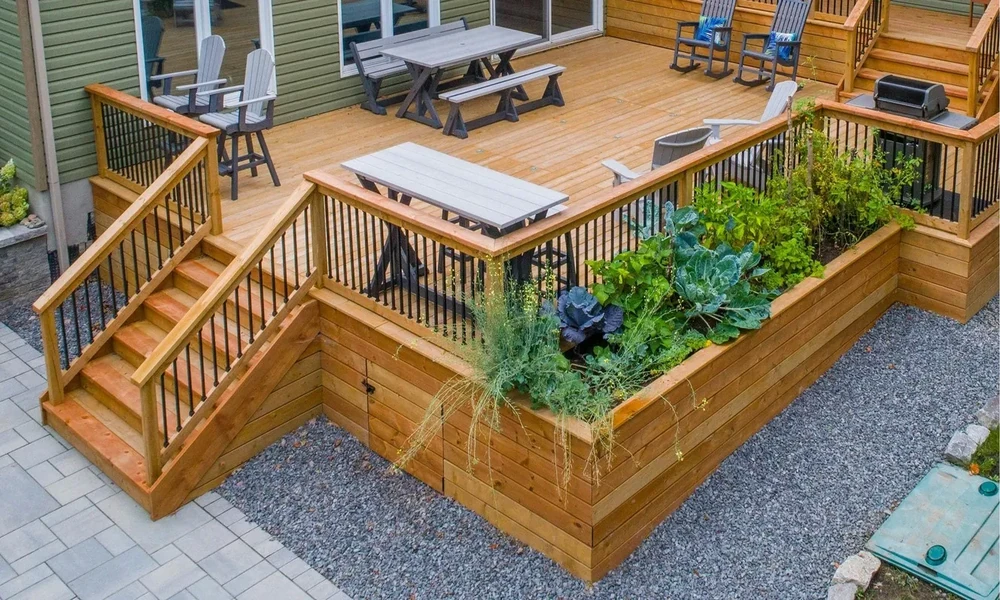
Most people check their deck by looking at the surface. They notice a gray, weathered board or a stain that has faded, and they plan a weekend of sanding. But the surface is the least important part of the structure. A deck is a system of footings, framing, connections, and finishes, and failures nearly always begin in the layers you cannot see from your patio chair. Learning to inspect a deck from the bottom up helps you catch small problems early and know when to bring in a professional. If you want expert eyes on a deck you already own, or a team to build one that is easy to maintain, Utahs Best Decks is one place to start the conversation.
Instead of comparing materials or designing around lifestyles, this guide walks through a physical inspection, starting at the soil and working up to the railing.
Layer One: Footings and Ground Contact
Everything rests on the footings, so begin there.
- Look for posts that have shifted, leaned, or sunk.
- Check for soil erosion or washed-out areas around footings.
- Make sure wood posts are not sitting directly in damp soil or standing water.
- Note any cracks in concrete piers.
- Confirm that water drains away from the deck instead of pooling beneath it.
In places with freezing winters, ground movement can lift and settle footings over time, so changes after a hard winter deserve extra attention.
Layer Two: The Connection to Your House
The ledger, the board that attaches the deck to the home, is one of the most critical parts of the structure. Many serious deck failures involve this connection.
- Look for gaps between the ledger and the house wall.
- Check for rust stains, loose bolts, or fasteners that appear to be pulling out.
- Watch for water stains or soft wood where the deck meets the siding.
- Look for flashing that is missing, cracked, or pulled away.
If the ledger looks questionable, do not wait. Avoid using the deck until a qualified professional has examined it.
Layer Three: Framing
The joists and beams carry the weight above. Get a flashlight and look underneath.
- Probe wood with a screwdriver. If it sinks in easily, the wood is soft and may be rotting.
- Watch for cracks, splits, or sagging sections in beams and joists.
- Check metal hangers and brackets for rust or loose nails.
- Look for signs of insects, such as small holes or sawdust-like debris.
- Confirm that joists sit firmly on their supports.
Layer Four: Decking Boards
Now move to the surface, where problems are easiest to see.
- Loose, popped, or protruding fasteners
- Cracked, warped, or cupped boards
- Soft spots that flex when walked on
- Gaps that are uneven or filled with debris
- Slippery areas caused by algae, mildew, or ice
Debris between boards holds moisture against the wood, so sweeping out gaps is more than cosmetic.
Layer Five: Railings and Stairs
Railings and stairs are where most injuries happen, so test them with real pressure.
- Push firmly on the railing at several points. It should not wobble or flex.
- Check posts at the base for looseness or rot.
- Make sure balusters are secure and evenly spaced.
- Test each stair tread and look for loose or cracked stringers.
- Confirm that handrails are graspable and securely attached.
The U.S. Consumer Product Safety Commission offers a helpful deck safety checklist that walks homeowners through many of these same checkpoints, including connections, railings, and fasteners.
Layer Six: Finish and Protection
The finish is the deck’s first line of defense against sun and moisture.
- Sprinkle a little water on the surface. If it beads, the finish is still protecting the wood. If it soaks in, it may be time to refinish.
- Look for peeling, flaking, or worn-through patches.
- Note areas of heavy fading, which suggest UV damage.
- Check for mold or mildew, especially in shaded areas.
Your Inspection Calendar
| When | What to Check |
|---|---|
| Spring | Full inspection after winter, footings, ledger, and fasteners |
| Early summer | Cleaning, finish condition, and gaps between boards |
| Fall | Clear debris, check railings, prepare for snow and moisture |
| After major storms | Quick look for damage, shifted parts, or fallen limbs |
Repair, Refinish, or Rebuild
| Condition | Typical Response |
|---|---|
| Minor surface wear | Clean and refinish |
| A few damaged boards | Replace individual boards |
| Loose railings or fasteners | Tighten or replace hardware promptly |
| Soft framing or a failing ledger | Professional evaluation and structural repair |
| Widespread rot or sagging | Consider partial or full rebuild |
Safety issues in the structure should never be delayed. Cosmetic issues can usually wait for a convenient season.
When to Call a Professional
Bring in a qualified builder or inspector if you find:
- Any signs of trouble at the ledger connection
- Soft or damaged framing
- A deck that moves, sways, or feels bouncy
- Rust or corrosion on structural hardware
- A deck that is old, or whose construction history you do not know
Also ask about permits. Repairs that affect structure may require approvals, and local codes vary.
Small Habits That Extend Deck Life
- Sweep leaves and debris regularly.
- Keep planters elevated so water does not sit against the surface.
- Trim nearby vegetation to improve airflow.
- Clear snow gently with a plastic shovel to avoid gouging.
- Reapply protection on a schedule that suits your materials.
Final Thoughts
A deck gives you years of enjoyment when it is cared for from the ground up. Build the habit of looking under it, testing it, and noticing small changes before they become big ones. Most of the work is simple observation, and the payoff is a deck that stays safe, solid, and good-looking for the long haul.
