

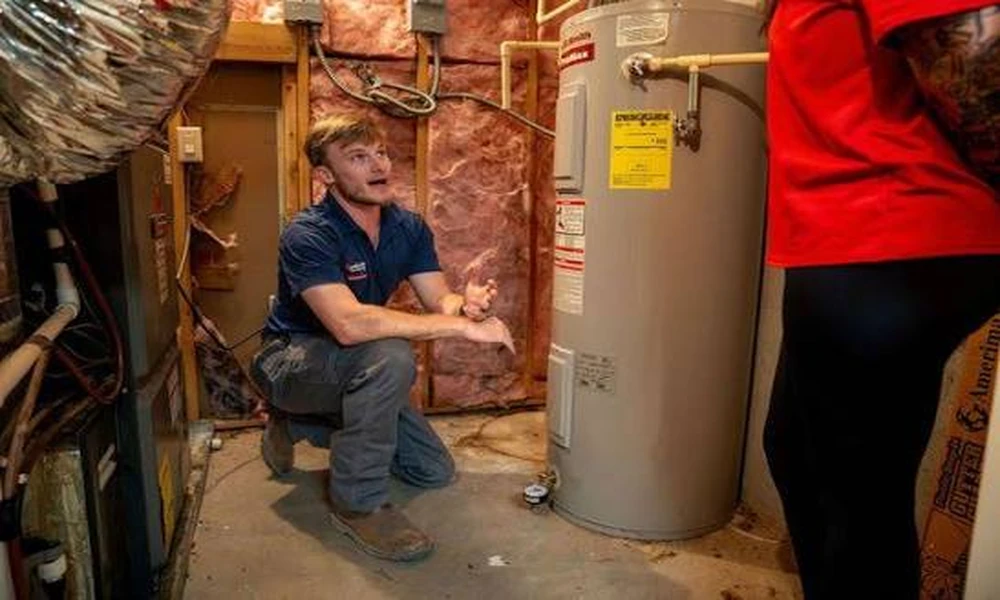
Point a flashlight at the label on the side of the water heater in your garage, basement or hall closet. Most people never read it, yet that faded sticker holds nearly everything needed to choose the next one. Its age, its size, its fuel, the way it vents and the pipes it connects to all leave a trail. Read that trail before the old tank fails and the decision becomes a calm one instead of a rushed purchase made with cold water in the shower.
Anyone lining up water heater replacement in Decatur will find that a good plumber reads those same clues before quoting a price. CJ Plumbing, a residential and commercial outfit based on Waters Run that keeps its phones open all day and night, has drawn customer praise for tank swaps finished on schedule and without a mess. Knowing what the old unit is telling you makes that conversation far more useful, whoever you call.
A Birth Date Hidden in the Serial Number
Water heaters rarely print a manufacture date in plain words. Instead, most brands tuck the year and month into the first few characters of the serial number. Depending on the maker, it might read as a letter for the month followed by two digits for the year, or as four digits showing month and year. Each manufacturer publishes its own decoding guide, so a quick search with the brand name usually cracks it.
That date matters more than any other single fact. A standard tank tends to last somewhere around 8 to 12 years. Metro Atlanta’s surface water supply is relatively soft, which helps limit heavy scale, but the sacrificial anode rod inside the tank still wears away over time. Once it is gone, the steel shell starts corroding from the inside. A tank in its eleventh year with rust at the fittings or a rumble when it heats is not a repair candidate. It is a replacement waiting for a convenient date.
Gallons on the Label Are a Starting Point
The capacity printed on the sticker, usually 40 or 50 gallons in most homes, tells you what the last owner or builder chose. It does not tell you whether that choice still fits. Kids grow into teenagers who take long showers, a basement bathroom gets added, or an empty nest makes a big tank wasteful.
The better number to shop by is the first hour rating, printed on the yellow EnergyGuide label of every new tank. It shows how much hot water the heater can deliver in a busy hour starting full. To estimate your own busiest hour, picture a typical weekday morning and add up rough hot water use.
- Each shower uses roughly 10 gallons of hot water.
- A running dishwasher uses about 6 gallons.
- A load of laundry on warm uses around 7 gallons.
- Shaving, handwashing and quick kitchen tasks add a few gallons each.
Three back to back showers plus a dishwasher lands near 36 gallons, so a tank with a first hour rating comfortably above that will keep up. If your current tank already runs cold before the last shower, the label just told you to size up.
Fuel, Flue and the Space Around the Tank
When the Old Tank Burns Gas
A gas tank sends exhaust up a metal flue, often through an old masonry chimney in older Decatur homes or a dedicated vent pipe in newer ones. Staying with a similar atmospheric unit usually means a straightforward swap. Moving to a tankless model changes much more. Those units need far larger gas input than a tank, which can mean a bigger gas line from the meter, and they vent through their own sealed pipe rather than the old flue.
When the Old Tank Runs on Electricity
Electric tanks sit on a dedicated 240 volt circuit, and like for like replacement is the simplest job in the trade. Federal efficiency rules that took effect in 2015 changed one thing, though. Electric tanks larger than 55 gallons now effectively must be heat pump models, and most new standard tanks carry thicker insulation, so they are often taller or wider than the one being removed. A tight closet that held a 50 gallon tank snugly may not accept a new one of the same capacity.
When a Heat Pump Model Is on the Table
Heat pump water heaters pull warmth from surrounding air, so they need a fair amount of open space, a condensate drain and a spot that stays reasonably warm. A Georgia garage is a good home for one much of the year. A cramped utility closet usually is not.
The Parts That Rarely Make It Into the Quote
The tank gets all the attention, but several smaller pieces decide whether the new one lasts.
The expansion tank. Homes with a pressure reducing valve or a backflow device on the water service form a closed system. Heated water expands with nowhere to go, which stresses the new tank. A small expansion tank on the cold line absorbs that pressure.
The relief valve discharge pipe. Every tank has a temperature and pressure relief valve, and its discharge pipe should run down to a safe point near the floor or outside, never capped or left dangling at shoulder height.
The drain pan. A tank sitting in an attic, upstairs closet or finished basement belongs in a pan piped to a drain, because tanks almost always fail by leaking.
The shutoff and connectors. An old gate valve on the cold line often fails to close fully. Replacing it alongside fresh connectors costs little during the swap and spares a headache years later.
The permit. Many metro Atlanta jurisdictions treat a water heater replacement as permitted plumbing work with an inspection. It is worth asking whether one will be pulled, since an inspector checks venting and gas connections that are easy to get wrong.
Setting Things Right on the First Day
A new tank often arrives from the factory set near 120°F, and that is the setting worth keeping. The Consumer Product Safety Commission’s guidance on tap water scalds recommends that temperature to protect young children and older adults, who suffer most scald injuries, and a lower setting trims energy use as well. A kitchen thermometer under the hottest tap after a couple of minutes of running water confirms what the dial actually delivers.
From there, the new tank deserves the attention the old one probably never got. A partial drain once a year clears sediment from the bottom, and a look at the anode rod after a few years tells you how fast it is wearing in your water. Write the installation date in marker on the tank itself, right beside that factory sticker. When the next replacement comes around a decade from now, whoever stands in front of it with a flashlight will not need to decode anything at all.
