

Key Takeaways
- Mosquito prevention is most effective when it becomes a weekly household habit.
- Containers, drains, toys, and outdoor equipment can hold enough water to support mosquito breeding.
- Maintaining screens and closing entry gaps helps keep mosquitoes outdoors.
- Personal protection, including EPA-registered repellents used as directed, can reduce the risk of bites.
- Arizona yards need attention after irrigation, storms, and during milder parts of the year.
- Persistent activity may point to a source beyond your property that should be reported.
Mosquito prevention is easier when it is handled as routine home maintenance rather than a last-minute response before a backyard gathering. A practical plan combines water management, entry-point repairs, and smart outdoor habits. Homeowners who want help identifying recurring conditions on their property can also consult Green Mango Pest Control as part of a broader home pest management approach.
Arizona’s dry climate does not eliminate mosquito concerns. Irrigation, pools, pet bowls, shaded patios, rainstorms, and stored containers can all create pockets of water or resting areas. A few quick checks each week can make outdoor spaces more comfortable and help limit the conditions mosquitoes need to thrive.
Table Of Contents
- Why Mosquito Prevention Needs a Year-Round Plan
- How Arizona Weather Affects Mosquito Activity
- The Weekly Yard Check
- Room-by-Room Home Protection
- Safer Outdoor Protection for Families
- Pool, Patio, and Garden Tips
- When to Report a Mosquito Problem
- A Simple Seven-Day Prevention Routine
- Common Questions About Mosquito Control
Why Mosquito Prevention Needs a Year-Round Plan
Mosquitoes need water to complete the early stages of their life cycle, so reducing standing water is one of the most useful actions a homeowner can take. Waiting until mosquitoes are already abundant often means more work, while a regular prevention routine addresses breeding sites before they become a larger problem.
Year-round prevention also protects the parts of a property that are easy to overlook. A neglected planter saucer, a loose pool cover, or a bucket left behind a shed can collect water after rain or watering. Building a few checks into normal yard care is simpler than searching for every possible source once mosquitoes are already biting.
How Arizona Weather Affects Mosquito Activity
Heat, irrigation, monsoon rainfall, and shade can all influence mosquito activity around Arizona homes. Dry conditions may reduce naturally occurring water in the landscape, but regularly watered yards can still provide the moisture mosquitoes need. Focus on what holds water on your specific property rather than relying on the forecast alone.
- Spring: Inspect irrigation lines, gutters, planters, and outdoor storage before hotter weather arrives.
- Summer: Check pet bowls, toys, pool covers, and shaded patio areas more frequently.
- Monsoon season: Walk the yard after storms to remove puddles and empty newly filled containers.
- Fall and winter: Continue inspecting water-holding items during mild stretches and after watering.
The Weekly Yard Check
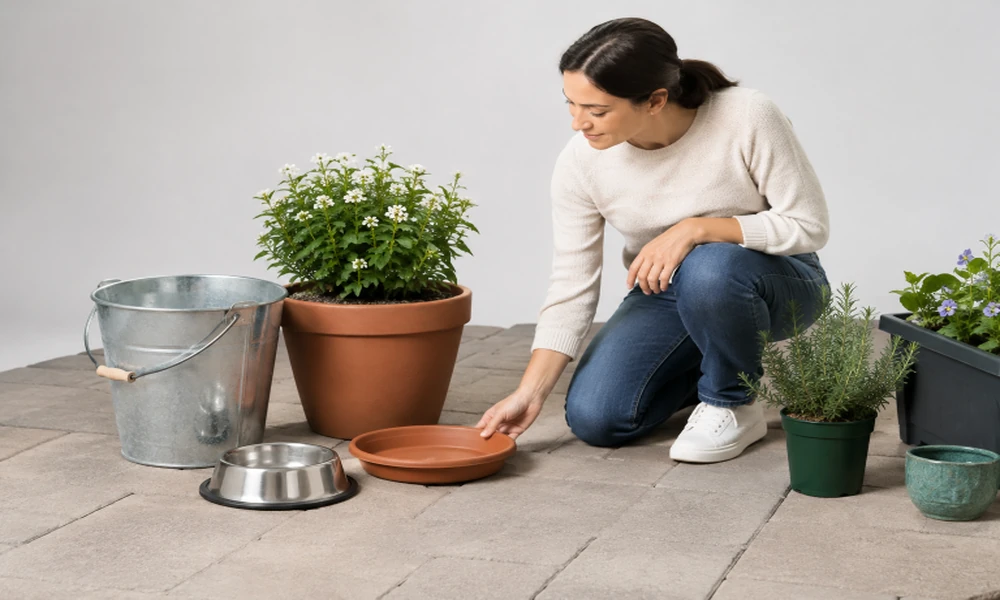
Consistent inspections are more useful than occasional deep cleans. The weekly steps for emptying, scrubbing, turning over, covering, or discarding water-holding items provide a sensible framework for household mosquito prevention.
- Empty buckets, toys, pots, trays, and unused containers.
- Scrub and refill birdbaths and pet-water bowls regularly.
- Clear leaves from drains, gutters, and low spots where water lingers.
- Check pool covers for pockets of standing water.
- Inspect hoses, outdoor faucets, and irrigation equipment for leaks.
- Turn over unused containers so rain and irrigation cannot collect inside them.
- Look beneath furniture, behind storage bins, and along shaded walls.
Room-by-Room Home Protection
Bedrooms and Living Areas
Repair torn window screens, check that doors close securely, and avoid leaving exterior doors propped open. Air conditioning can help keep doors and windows closed when practical. If mosquitoes get indoors, inspect quiet, darker areas near windows, furniture, closets, and doorways where they may rest.
Kitchens, Utility Areas, and Garages
Look beneath sinks for leaks, keep floor drains clear, and remove damp buckets, cloths, or containers that can collect water. In garages and storage spaces, store cans, bins, tarps, and tools so they cannot become water catchments. Check these shaded spaces after storms or irrigation cycles.
Safer Outdoor Protection for Families
For outdoor meals, sports, walks, and evening gatherings, combine property maintenance with personal protection. Use an EPA-registered insect repellent according to its label, and follow all product directions for children. Avoid applying repellent to a child’s hands, eyes, or mouth. Loose-fitting clothing that covers exposed skin can also be useful when conditions allow.
Use screened areas or netting where appropriate, especially for seated outdoor activities. Keep doors closed during frequent trips between the patio and the house, and encourage family members to make repellent part of their normal routine before spending time outdoors.
Pool, Patio, and Garden Tips
A maintained pool is only one part of mosquito prevention. Covers, equipment areas, nearby containers, and garden features also deserve attention. Keep pool water and water features maintained according to the manufacturer’s directions, and do not allow covers to retain standing water.
- Empty plant saucers or use containers that drain effectively.
- Keep rain barrels tightly covered.
- Trim dense vegetation near sitting areas to reduce sheltered resting spots.
- Correct low areas where irrigation water remains after watering.
- Store children’s water toys indoors or on their sides.
When to Report a Mosquito Problem
Repeated mosquito activity may come from beyond your yard, such as a drainage issue, a neglected pool, a vacant property, or another nearby water source. In Maricopa County, residents can use the local mosquito safety and reporting resources to review prevention guidance and report concerns that may affect the neighborhood.
A Simple Seven-Day Prevention Routine
- Day One: Check the front yard, driveway, and entry areas.
- Day Two: Inspect patios, balconies, furniture, and containers.
- Day Three: Review plant pots, saucers, and garden tools.
- Day Four: Clean pet areas and refresh water bowls.
- Day Five: Inspect pool equipment, drains, and covers.
- Day Six: Test screens, doors, and garage access points.
- Day Seven: Repeat a quick walk-through after rainfall or watering.
Common Questions About Mosquito Control
How Often Should Standing Water Be Removed?
Check for standing water at least once a week, and after rainfall, irrigation issues, or outdoor events that leave containers outside.
Can Mosquitoes Enter Through Window Screens?
Yes. Torn mesh, loose frames, and gaps around doors or windows can provide entry points. Repairing screens and keeping doors closed helps reduce indoor mosquito activity.
Are Mosquitoes Only a Problem at Dusk?
No. Mosquito activity varies by species. Some bite during the day, while others are more active in the evening or at night, so prevention should not be limited to a single time of day.
What Should Homeowners Do About Permanent Water?
Keep water features properly maintained, cover water storage when possible, and follow label directions for any approved treatment product. For larger or recurring issues, seek guidance from local vector-control resources.
Conclusion
Mosquito prevention does not require an overly complicated routine. Weekly water checks, well-maintained screens, thoughtful outdoor habits, and prompt attention after storms or irrigation can make a meaningful difference. The most reliable approach is simple: remove breeding opportunities, block entry points, protect exposed skin, and act quickly when mosquito activity continues.
