

Table of Contents
- Hybrid Work Models and Their Impact
- The Flight to Quality
- Rise of Mixed-Use Developments
- Growth of Flexible Workspaces
- Integration of Technology and Smart Offices
- Emphasis on Sustainability and Wellness
- Conclusion
The landscape of urban office spaces is evolving at an unprecedented pace. New work patterns, technological progress, and an increased focus on health and sustainability are driving substantial changes. Whether you are managing corporate real estate, planning development, or seeking leasing opportunities, grasping these pivotal shifts will position you for success.
Adapting to these trends is essential not only to attract and retain talent but also to boost productivity and maximize investment returns. Smart strategies in office design, leasing, and amenities are shaping decisions about which buildings rise above the competition. For organizations evaluating NYC office space, factors such as flexible layouts, advanced technology infrastructure, and sustainability-focused features are increasingly influencing leasing decisions. As urban tenants demand flexibility, connectivity, and sustainable features, property stakeholders must respond with innovation while providing tangible value for workers and employers alike.
Shifts such as hybrid work arrangements, quality-focused leasing, and mixed-use environments are expanding the definition of what an office can be. Understanding how these developments play out on the ground will empower market participants to make informed choices. The insights that follow highlight how forward-thinking companies, investors, and cities are navigating the transition.
Hybrid Work Models and Their Impact
The momentum behind hybrid work is reshaping office occupancy across major cities. Recent studies have shown that office-based workdays are substantially down from pre-pandemic levels, falling from 42 percent in 2019 to under 30 percent by 2023. This durable shift underscores the importance of offices that are adaptable to fluctuating schedules and workers who divide their time between the office and remote settings. Businesses are responding by leveraging digital tools, redesigning spaces, and reimagining policies to accommodate these blended routines.
Furthermore, companies are discovering that the hybrid model can be a catalyst for greater employee satisfaction and operational resilience. It encourages new modes of collaboration through both in-person and virtual interaction, fostering innovation even as the traditional workspace undergoes significant changes. Organizations that actively support flexibility are often rewarded with higher employee engagement and an increased ability to attract talent from broader geographic regions, further invigorating the urban workforce.
The Flight to Quality
As businesses settle into new norms, demand for top-tier, amenity-rich office space is surging in key urban markets. In 2025, over half of the largest U.S. office leases were concentrated in prime downtown properties, reflecting a clear “flight to quality.” Modern tenants increasingly prefer buildings that deliver enhanced wellness features, advanced technology, and vibrant locations close to transit, dining, and retail. Class A buildings, with their attractive amenities and prestige, are standing out in a field where average buildings may face growing vacancies. Insights from Schumacher Appraisal point to how this race to quality is pushing owners of older properties to consider major upgrades or transformation to stay competitive.
In addition to physical upgrades, quality is also being redefined by the types of services and experiences offered in the workplace. Property managers now curate amenities such as on-site fitness centers, rooftop lounges, and wellness programming to cultivate appealing environments that go beyond the basics of office work. Tenants are looking for value not just in square footage but in the daily experience provided to their teams.
Rise of Mixed-Use Developments
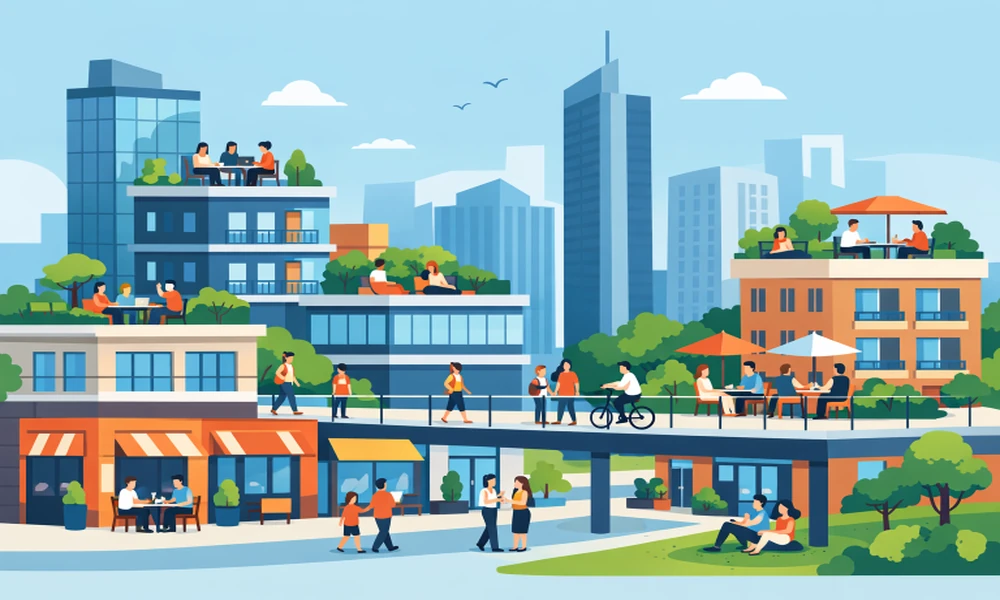
The urban workforce is showing a marked preference for environments blending work, life, and leisure. Mixed-use developments integrate offices with residences, retail, fitness, and social amenities, helping meet the demand for convenience and connectivity. These “lifestyle office markets” now command substantial rent premiums, some reports show a 32 percent increase over traditional offices, and their vacancy rates remain significantly below average. By fostering a sense of community and offering walkability alongside top-tier features, these developments attract forward-looking employers and employees alike.
Mixed-use complexes are often designed with outdoor plazas, co-living spaces, and easy access to amenities, contributing to holistic experiences that align with the aspirations of modern professionals. As the boundaries between work and leisure blur, these environments have become magnets for technology firms, creative agencies, and innovative enterprises aiming to nurture community and creativity as part of their organizational culture.
Growth of Flexible Workspaces
Amid continued shifts in workforce size and structure, the appetite for flexible office arrangements is growing. Coworking and flexible workspaces accounted for over 2 percent of the U.S. office market in 2025, with more than 1,000 new coworking locations opening nationwide that year. Larger corporations and startups alike benefit from environments that can scale with them and adapt to changing team needs. This growth not only addresses fluctuating demand but also enables companies to reduce long-term commitments in a time of evolving business priorities.
The emphasis on flexibility is also leading to partnerships between office providers and companies, allowing modular leases and on-demand office use. Many organizations utilize memberships that grant employees access to multiple locations, thereby supporting decentralization and business continuity. In a competitive market, those office owners who embrace adaptability in their leasing models are set to thrive.
Integration of Technology and Smart Offices
Smart office solutions are rapidly becoming standard in competitive office markets. Automated controls for lighting, temperature, and access enhance both comfort and efficiency. Sensors help optimize space use and manage building systems to lower costs and support sustainability goals. These technologies also drive security, facilitate seamless tenant experiences, and empower companies to gather data for continuous improvement. With digital transformation reshaping workplaces across the board, advanced office buildings are seeing higher occupancy and tenant satisfaction levels.
From high-speed connectivity to AI-enabled conference rooms, technology is transforming how offices function and how occupants interact with their environments. Adoption of touchless access, real-time occupancy monitoring, and intuitive workspace booking systems are just some of the innovations redefining the tenant experience. In the years ahead, buildings that adopt the latest in proptech will attract more forward-thinking businesses and remain adaptable to future demands.
Emphasis on Sustainability and Wellness
Sustainability initiatives have shifted from optional upgrades to essential requirements. Tenants increasingly prioritize buildings with green certifications and features that support health, such as natural lighting, air purification, biophilic design, and onsite wellness services. Energy-efficient systems are helping owners reduce environmental impact while also appealing to environmentally conscious occupiers. These wellness features are seen not only as a recruiting and retention tool but as catalysts for higher productivity, improved morale, and organizational resilience.
Governments and regulatory agencies are also raising the bar with new energy standards and incentives, further encouraging building owners to invest in renewable energy, water conservation, and sustainable construction materials. Health-focused amenities such as outdoor terraces, quiet zones, and proximity to parks are increasingly visible in new projects, signaling a deep, industry-wide commitment to long-term well-being. As a result, urban offices are evolving beyond functional workplaces to become centers of community health and sustainability.
Conclusion
The urban office market is evolving with the rise of flexible work, premium buildings, integrated mixed-use developments, next-generation technology, and a strong focus on sustainable and wellness-oriented design. Decision-makers who stay ahead of these trends are better positioned to create valuable and appealing spaces that meet the needs of today’s and tomorrow’s workers. Understanding what drives new demand allows stakeholders to develop, lease, and operate successful office environments in vibrant urban centers.
Ultimately, the offices of the future will be defined by their agility, experiential value, and commitment to both people and planet. As these trends continue to accelerate, those who anticipate change and embrace a holistic vision for urban workplaces will shape the next generation of thriving, resilient cities.
