

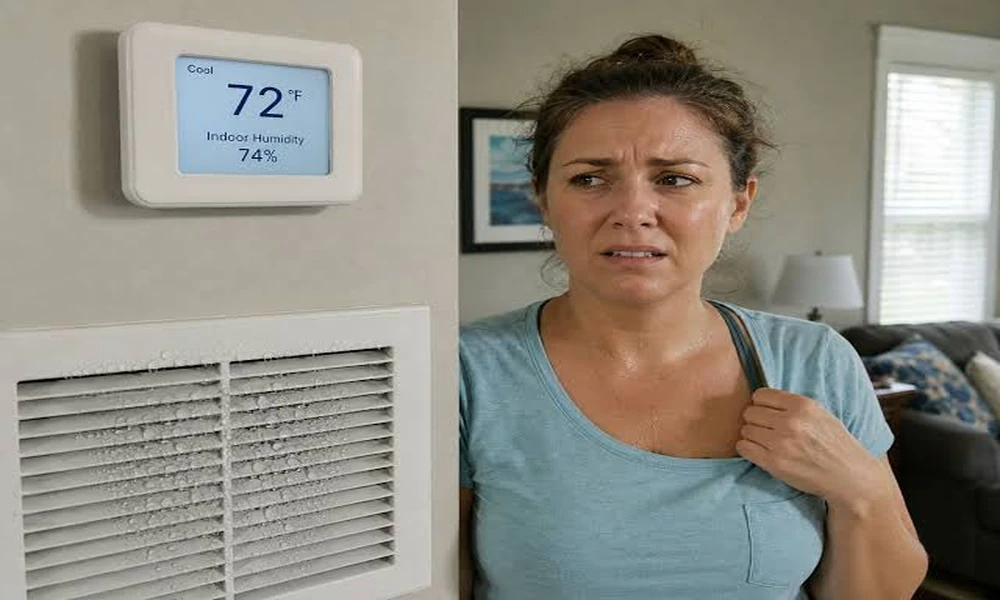
You set the thermostat to a comfortable number, the air conditioner is humming, and the house still feels clammy. Windows fog, bathrooms stay damp, and a musty smell hangs in the closets. It is one of the most common comfort complaints in warm, humid places, and it is rarely a sign that your system is broken. More often, it is a sign that something about how the system, the house, or the daily routine is letting moisture win. The comfort specialists at Ratti Air and Heat see this often, so here is a symptom-by-symptom guide to what may be going on.
First, Understand What an Air Conditioner Does
An air conditioner does two jobs at once: it lowers the temperature and it pulls moisture out of the air. The second job only happens while the system is running. When the cooling coil is cold, water vapor condenses on it and drains away. If the system stops too soon, the air may be cool but still damp.
That is why comfort depends on more than the number on the thermostat. How long the system runs, how much moisture the house produces, and where moisture sneaks in all matter.
Symptom One: The House Is Cool but Clammy
Likely cause: Short cycling. If the system reaches the set temperature quickly and shuts off, it may not run long enough to dehumidify. This often happens when equipment is too large for the home.
The EPA’s guidance on controlling moisture in your home makes this point directly. It notes that in hot regions, air conditioners that cool the air too quickly may not run long enough to remove excess moisture from the air.
What to do:
- Ask a professional to check how long each cooling cycle lasts
- Have a technician confirm that the system size matches a proper load calculation
- Consider whether adjustments or a different type of equipment could improve moisture removal
Symptom Two: Windows Fog or Collect Moisture
Likely cause: Excess indoor moisture meeting cool glass. The EPA explains that excess moisture condenses on window glass because the glass is cold, and lists everyday sources such as long showers, running water, boiling or steaming in cooking, plants, and drying clothes indoors. It also notes that a tight, energy-efficient house holds more moisture inside, so you may need to run a kitchen or bath fan sometimes, or briefly open a window.
What to do:
- Use a humidity indicator to measure the relative humidity in your house
- Run bathroom and kitchen fans during and after showers and cooking
- Avoid drying laundry indoors where possible
- Check caulking and storm windows, which keep interior glass warmer
Symptom Three: Musty Smells in Closets, Bathrooms, or Corners
Likely cause: Moisture sitting in low-airflow areas. Closed closets and furniture pushed against walls can trap damp air. The EPA suggests opening doors between rooms to increase circulation, using fans, and moving furniture away from wall corners to promote air and heat circulation. It also recommends making sure your house has a source of fresh air and can expel excessive moisture.
What to do:
- Keep interior doors open when practical
- Pull furniture slightly away from exterior walls
- Check for leaks around tubs, sinks, and pipes
- Look for stains, soft spots, or peeling paint that could point to a hidden leak
Symptom Four: Bathroom and Kitchen Moisture Lingers
Likely cause: Poor exhaust ventilation. Fans only help if they actually move air outside. The EPA recommends using exhaust fans in bathrooms and kitchens to send moisture to the outside, not into the attic, and venting the clothes dryer to the outside as well.
What to do:
- Confirm each fan ducts to the exterior
- Clean fan covers so they can move air freely
- Run fans long enough to clear the room, often 15 to 20 minutes after a shower
- Have an HVAC or ventilation professional inspect fans that seem weak
Symptom Five: Damp Crawlspace, Garage, or Lower Level
Likely cause: Water entering from outside or from the ground. The EPA lists fixing leaks and seepage as a first step, noting that the ground should slope away from the house and that a lack of gutters or water flowing toward the house can cause water problems. It also recommends covering dirt in crawlspaces with plastic and making sure crawlspaces are well ventilated.
What to do:
- Make sure gutters and downspouts carry water away from the foundation
- Check the soil grade near the house
- Inspect crawlspaces for standing water, bare dirt, and musty odors
- Call a professional if moisture keeps returning
Symptom Six: Some Rooms Are Sticky and Others Are Fine
Likely cause: Airflow or duct problems. Rooms far from the main unit, rooms with leaky ducts, or spaces with closed vents may not get enough conditioned air to dry out properly.
What to do:
- Check that supply vents are open and not blocked
- Make sure return airflow is not restricted by doors or furniture
- Ask a technician to inspect ductwork for leaks, disconnections, or poor design
- Replace dirty filters on schedule, since restricted airflow hurts both cooling and dehumidifying
Do Dehumidifiers Help?
They can. The EPA notes that dehumidifiers and air conditioners can reduce moisture in the air, especially in hot, humid climates, but cautions that the appliances themselves should not become sources of biological pollutants. In practice, that means emptying and cleaning portable units, and having a professional maintain any whole-house equipment and drain lines. A dehumidifier is a good tool when the basics are covered, not a substitute for fixing leaks or ventilation.
What About Humidifiers and Other Moisture Makers?
If you use a humidifier in cooler months, watch for the signs the EPA describes. It suggests turning off certain appliances, such as humidifiers or kerosene heaters, if you notice moisture on windows and other surfaces, and says your humidistat is set too high if excessive moisture collects on windows. It also recommends against using humidifiers in buildings without proper vapor barriers, so check with a building contractor if you are unsure.
A Quick Home Humidity Checklist
Walk through the house with this list:
- Measure humidity with a simple indicator in several rooms.
- Check windows for fogging or moisture.
- Look under sinks and around tubs for slow leaks.
- Make sure bathroom, kitchen, and dryer vents exit outdoors.
- Inspect gutters, downspouts, and the ground slope outside.
- Look at the crawlspace or garage for damp spots.
- Check that vents are open, filters are clean, and doors are not blocking air.
- Notice how long your air conditioner runs during a typical cycle.
When to Call a Professional
Bring in a qualified HVAC technician if you notice:
- The system runs in short bursts and shuts off
- Rooms stay clammy even when the thermostat is satisfied
- Water around the indoor unit or frequent drain line clogs
- Persistent musty odors or visible mold growth
- Condensation on supply vents or ducts
- Big differences in comfort from room to room
- Higher bills with no change in habits
A good technician will look at the whole picture: equipment size, airflow, ductwork, controls, and the building itself, not only the unit outside.
Final Thoughts
A sticky house is a puzzle with several possible pieces: equipment that cycles too quickly, moisture sources inside the home, weak ventilation, or water getting in from outside. Work through the symptoms, fix what you can, and bring in a professional for the parts you cannot see. With a little detective work, comfort comes back, and so does the fresh, dry feel you expected from your air conditioner in the first place.
