

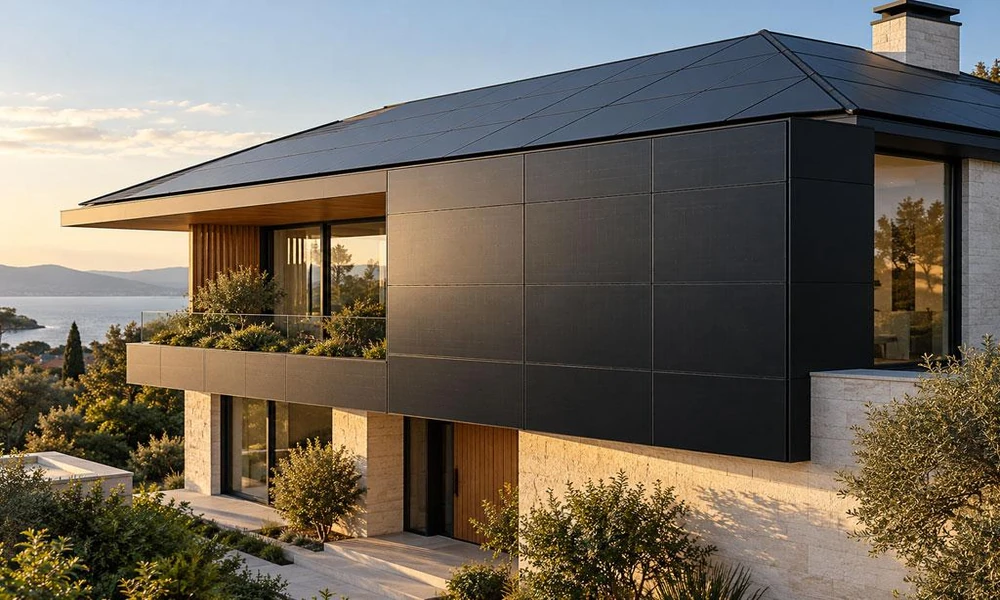
When planning a modern exterior, homeowners often spend considerable time choosing windows, roofing and cladding. Solar deserves the same attention. Building-integrated photovoltaics can occupy a prominent part of a roof or façade, making its appearance part of the architecture. Decisions about color, surface finish and layout should therefore begin alongside the rest of the exterior design.
Start by identifying the visual role you want the installation to play. You might prefer a quiet surface that blends with surrounding materials, or a clearly expressed solar feature that becomes part of the home’s character. Bring reference photographs to the design discussion and explain which elements appeal to you. This gives your architect or supplier a more useful starting point than simply requesting a contemporary appearance.
Consider the complete exterior palette. Place the proposed photovoltaic sample beside roofing, wall finishes, window frames and gutters. Pay attention to differences between warm and cool blacks, as well as variations in texture. A sample that appears close to another material indoors may look different outside. Request an opportunity to view the combination in daylight before making the final selection.
Surface gloss deserves a separate review. Ask how the module glass, visible frame and adjoining building materials will look from the street, garden and upper-floor windows. Rather than relying on a single promotional image, request photographs taken from several angles. If possible, visit a completed installation. Record the product model and finish shown so that the appearance being discussed is clear to everyone involved.
Visual consistency also depends on components within the module. B601RS EVA solar film is a black infrared-reflective encapsulation material intended for photovoltaic modules, including designs requiring an all-black appearance. According to its product information, it is designed to improve appearance consistency and limit grayish discoloration after lamination. It offers module manufacturers a material option when balancing visual requirements with optical and encapsulation performance.
For homeowners, the practical step is to evaluate the completed photovoltaic product. An encapsulation film is one part of the assembly, and the overall appearance depends on the cell arrangement, glass, borders and manufacturing process. Ask the finished-product supplier for representative samples and clarify whether the sample matches the exact configuration proposed for your property. Any change in specification should be reviewed before ordering.
The layout can be as influential as the color. Ask your designer to show how module edges relate to roof boundaries, windows and other architectural lines. Review awkward gaps, small leftover areas and visible cable routes. Discuss these items alongside the energy layout so that appearance and generation are considered together. The Department of Energy’s BIPV findings identify uniform appearance and durable aesthetics among important product requirements.
Before placing an order, create a simple approval record containing the agreed layout, sample photographs, product references and finish description. Ask how a replacement module would be matched if one becomes damaged later. For a large visible surface, request a mock-up or assembled sample showing the glass, frame and joints together. That gives you a concrete reference for reviewing the delivered installation.
