

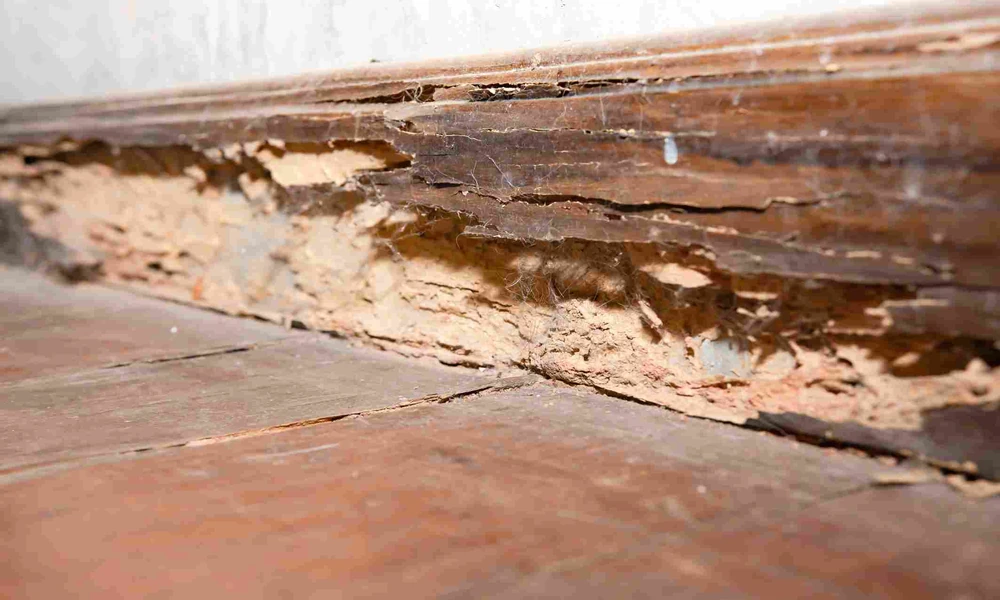
A concrete slab does not always stop subterranean termites from reaching a home. These termites move through the soil beneath the foundation and look for small openings where they can enter the structure. For a Central Florida home, termite inspection and treatment focus on the places where termites are most likely to enter. In many cases, that means the small breaks where a concrete slab meets the surrounding soil.
Why a Slab Foundation Doesn’t Block Termite Access
Most Central Florida homes sit on monolithic slabs poured directly against the ground. This construction method leaves several places where soil connects to the interior of a structure without being visible from outside:
- Expansion joints where the slab meets a driveway, patio, or garage apron give termites a narrow but usable path upward.
- Plumbing penetrations for water lines, drains, and AC condensate leave small voids around the pipe that were never fully sealed during construction.
- Utility conduits running under the slab for electrical or irrigation lines create the same kind of hidden opening.
The openings don’t have to be large. Even narrow gaps can give termites a route from the surrounding soil into the structure, despite a slab that appears solid from the surface.
How Liquid Treatments Reach Soil Beneath Concrete
Where the foundation is bordered by exposed soil, technicians dig a shallow trench along the perimeter and apply the termiticide as they refill it. A typical trench is about six inches wide and six inches deep. A rod is often inserted into the bottom of the trench at regular intervals to deliver the termiticide deeper into the soil, where termites may also be traveling.
Foundation edges covered by a patio, garage floor, or walkway need a different approach, since digging isn’t an option once concrete is already in place. Technicians drill vertical holes through the slab, expansion joints, or pipe penetrations, drilled at intervals specified for the treatment. The termiticide is then injected directly into the soil beneath the slab. Each hole is patched to match the surrounding surface once treatment is complete. Trenching and drilling are different techniques, but both are meant to create an unbroken treated zone around the foundation. If one section is missed, termites may find a way through the gap.
Why Modern Termiticides Do More Than Kill on Contact
Most professional termite treatments today use non-repellent termiticides that termites can’t detect as they move through treated soil. As workers forage, they can pick up small amounts of the product and carry it back to the colony through normal contact and grooming. That means the treatment can affect more than just the termites that first entered the treated soil, extending its impact beyond the barrier itself.
Avata Pest Control’s liquid treatments follow this soil-barrier approach around a property’s foundation, including areas beneath driveways, walkways, and other concrete surfaces where termites may still be traveling. When combined with exterior bait stations, the treatment addresses both the areas a colony is already using and locations where future termite activity may develop.
What a Yearly Inspection Checks Around the Foundation
A termite barrier doesn’t stay the same forever. Landscaping, home additions, repaved patios, and plumbing work can disturb treated soil or create new access points around the foundation. A yearly inspection focuses on anything that may have changed around the foundation since the last treatment, including:
- A new patio, sidewalk, or driveway repair that cuts across part of the original treated perimeter.
- Patch material around previously drilled treatment holes that has cracked, loosened, or worn away over time.
- Fresh mud tubes climbing an expansion joint or another part of the foundation where termites can move out of sight.
- Areas where landscaping, irrigation work, or soil movement may have disturbed treated soil near the foundation, potentially changing the treated zone without anyone noticing.
A concrete slab alone isn’t what protects a home from termites. The important part is maintaining treated soil wherever the foundation meets the ground. Even a small gap in the treated zone can become an entry point for termites. A yearly inspection checks whether anything around the foundation has changed enough to affect that protection.
